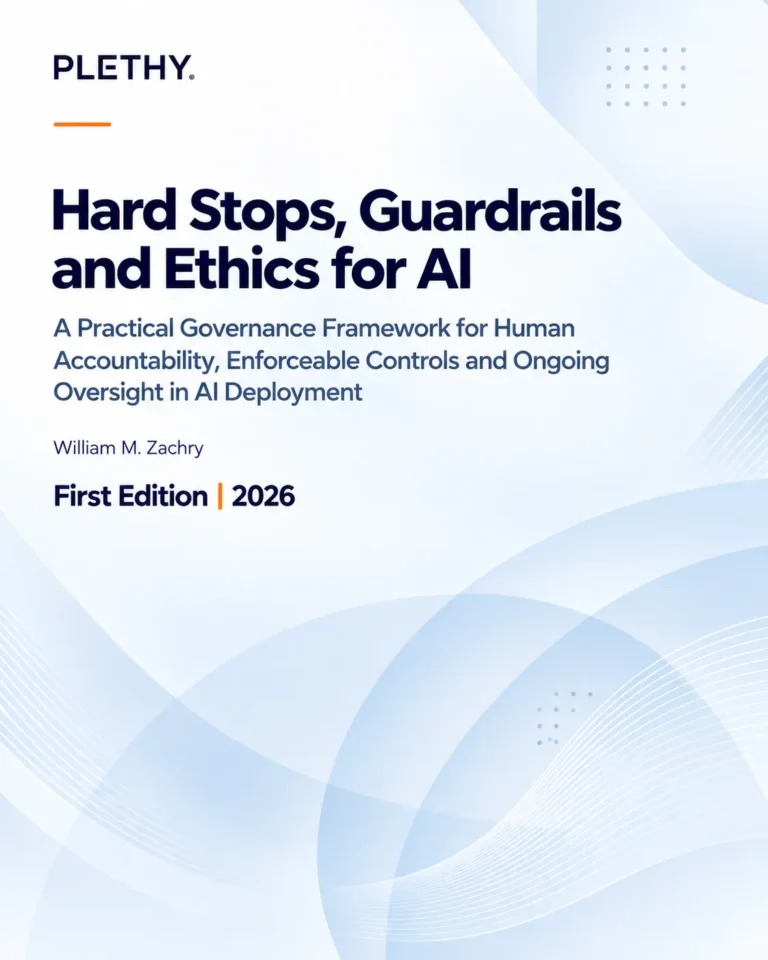
Hard Stops, Guardrails, and Ethics for AI

As artificial intelligence becomes more capable and autonomous, organizations need more than traditional policies and oversight. William M. Zachry presents a practical governance framework designed to keep human accountability and enforceable controls at the center of AI deployment.

Session Information

Hard Stops, Guardrails, and Ethics for AI

Date & Time
October 7, 2026 ยท 9:00 AM
Location
Holiday Inn Express West Yellowstone
Speakers
William M. Zachry

Keeping Human Accountability at the Center of AI

The framework focuses on a critical question for organizations using AI: not simply whether the technology can perform a task, but whether it should be allowed to, under what conditions, and who remains accountable when something goes wrong.

Session Speakers

William M. Zachry

Executive Director, CompSense Strategic Advisor, Plethy Inc.

What You'll Learn

Key Takeaways

A practical framework for governing increasingly capable AI systems while preserving accountability, oversight, and meaningful human control.

1

Hard stops are different from guardrails: Some AI risks should not simply be managed. They require enforceable limits that prevent the system from acting

2

Human accountability cannot be delegated: Every consequential AI deployment should have a named individual responsible for the decision to deploy and its ongoing operation

3

AI should be validated before deployment: Testing should include deliberate attempts to break, misuse, or push the system beyond its authorized boundaries

4

Governance must continue after launch: AI systems, data and operating conditions change, making ongoing review and re-certification essential

5

Humans must retain the ability to intervene: Organizations need defined authority and tested mechanisms to suspend, restrict or terminate an AI system when necessary

6

Incentives matter: Organizations should understand what an AI system is actually being rewarded or optimized to do and identify conflicts before deployment

7

Evidence matters more than policy: Effective AI governance requires organizations to demonstrate that controls work, not simply state that they exist

Who Is Accountable When AI Goes Too Far?

Effective governance defines the boundaries before the system acts and establishes who has the authority to intervene when those boundaries are tested.

Hard Stops, Guardrails, and Ethics for AI

Access the supporting presentation and resources from William M. Zachry’s session at the Montana Self Insurers’ Association conference.

The presentation explores a practical framework for setting enforceable boundaries around AI systems, assigning human accountability, validating systems before deployment, and maintaining effective governance throughout their lifecycle.

Report Author

William M. Zachry

Keep Humans in Control of Consequential AI Decisions

Strong AI governance requires more than written policies. Organizations need clear authority, tested controls, enforceable boundaries, and evidence that those safeguards work in practice.